


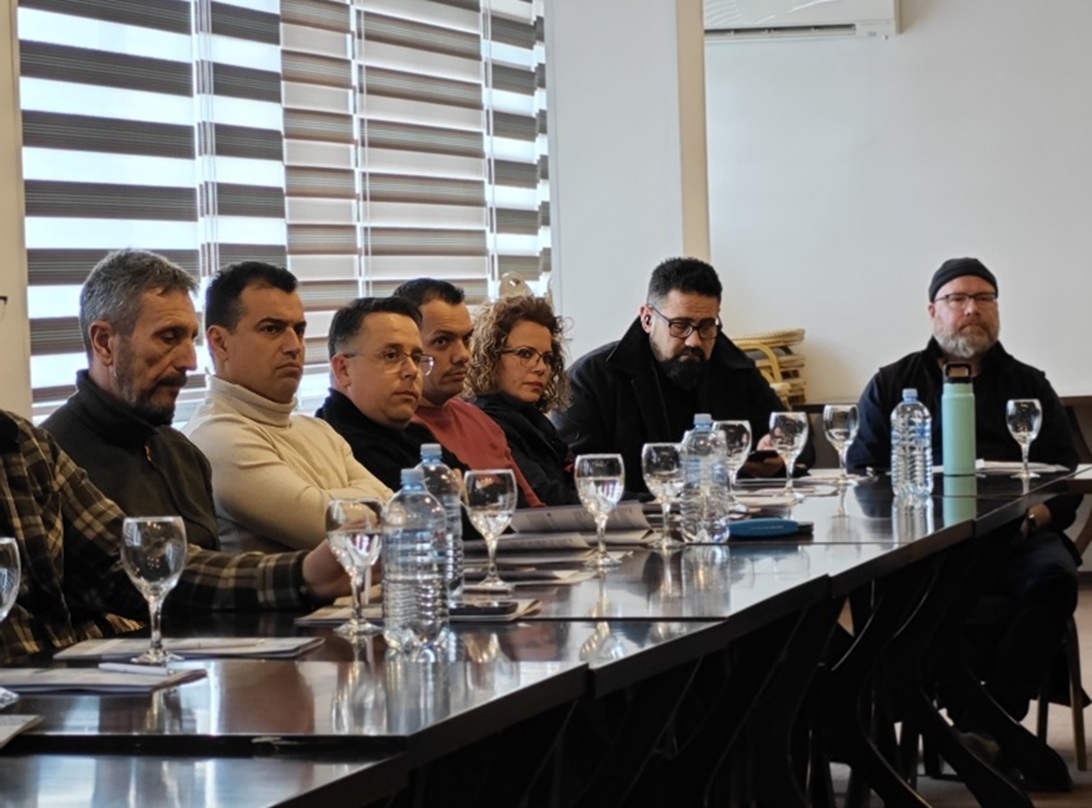
In partnership with the Macedonian Young Lawyers Association (MYLA), we successfully delivered a two-day training titled “Training on Monitoring and Advocacy in Water Governance”, held on 20–21 February 2026 at Hotel “Gardenia”, Veles.
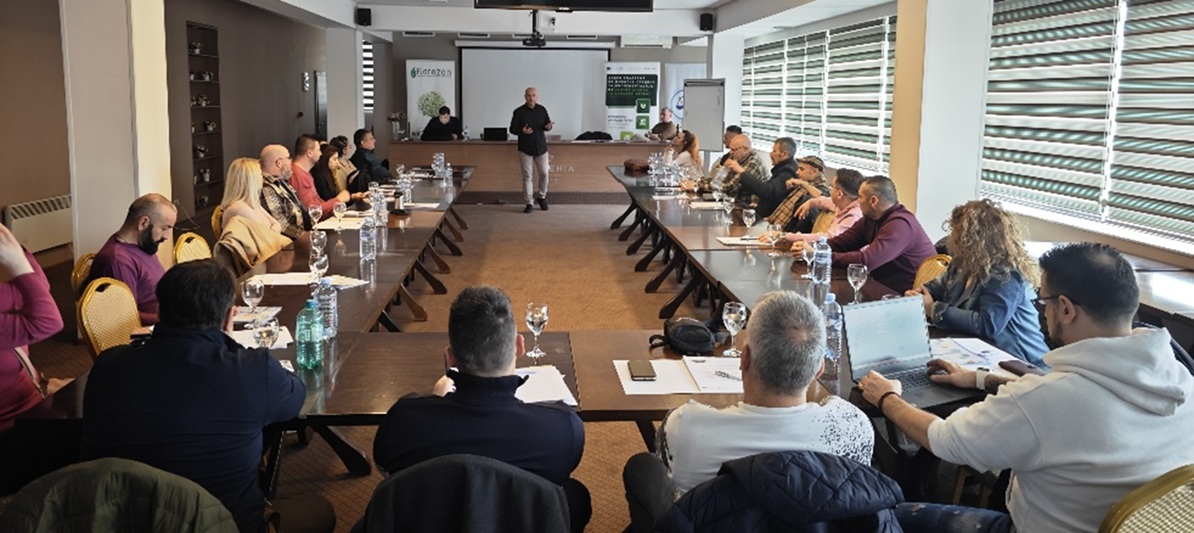
The training was organized within the project “Citizen Monitoring for Responsible Water Management”, financed through the sub-granting scheme of the project “Good Governance in the Environment for the Green Agenda for the Western Balkans”, implemented by the Center for Legal Research and Analyses, the Macedonian Young Lawyers Association and Front 21/42, and financially supported by the European Union.
A total of 28 participants took part in the training, including representatives of local and national civil society organizations, informal initiatives and eco-activists, as well as activists from the American Peace Corps. Participants came from multiple municipalities and cities, including Skopje, Kumanovo, Veles, Kochani, Gradsko, Demir Kapija, Negotino, Kavadarci, Prilep, Bogdanci and Gevgelija, enabling exchange of experiences and discussion of diverse local water-related challenges.
Key topics and hands-on work
The programme combined expert inputs with interactive group work. On the first day, participants gained an overview of the legal framework for water management, institutional responsibilities and coordination, and legal mechanisms related to access to information, public participation and access to justice. A strong practical focus was placed on citizen water monitoring and the application of the SVAP methodology (Stream Visual Assessment Protocol) as an accessible tool for field-based assessment and documentation of conditions in streams and river corridors.
The second day focused on evidence-based advocacy and lobbying, as well as communication tools for turning monitoring findings into actionable recommendations for institutions and the public. Participants worked in groups to draft a policy brief and a press/public statement, receiving practical guidance on structuring recommendations, developing clear messages and preparing materials for public presentation.
Next steps
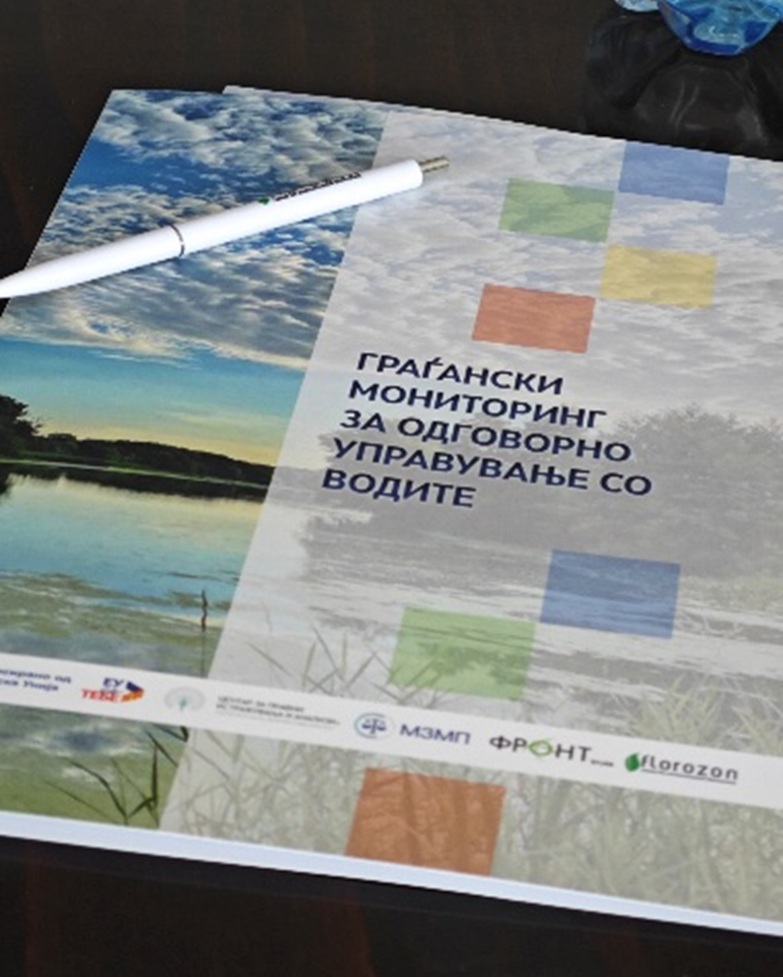
Feedback from participants indicated a high level of satisfaction and strong interest in applying the newly acquired knowledge, with particular attention given to the SVAP methodology and the module on advocacy and communication. The training established a solid basis for the next phase of the project, including a pilot monitoring action in the Vardar River Basin, identification of critical hotspots, and development of findings and recommendations to be presented to institutions and the wider public at a dedicated public event.
The training was organized within the project “Citizen Monitoring for Responsible Water Management”, financed through the sub-granting scheme of the project “Good Governance in the Environment for the Green Agenda for the Western Balkans”, implemented by the Center for Legal Research and Analyses, the Macedonian Young Lawyers Association and Front 21/42, and financially supported by the European Union.
A total of 28 participants took part in the training, including representatives of local and national civil society organizations, informal initiatives and eco-activists, as well as activists from the American Peace Corps. Participants came from multiple municipalities and cities, including Skopje, Kumanovo, Veles, Kochani, Gradsko, Demir Kapija, Negotino, Kavadarci, Prilep, Bogdanci and Gevgelija, enabling exchange of experiences and discussion of diverse local water-related challenges.
Key topics and hands-on work
The programme combined expert inputs with interactive group work. On the first day, participants gained an overview of the legal framework for water management, institutional responsibilities and coordination, and legal mechanisms related to access to information, public participation and access to justice. A strong practical focus was placed on citizen water monitoring and the application of the SVAP methodology (Stream Visual Assessment Protocol) as an accessible tool for field-based assessment and documentation of conditions in streams and river corridors.
The second day focused on evidence-based advocacy and lobbying, as well as communication tools for turning monitoring findings into actionable recommendations for institutions and the public. Participants worked in groups to draft a policy brief and a press/public statement, receiving practical guidance on structuring recommendations, developing clear messages and preparing materials for public presentation.
Next steps
Feedback from participants indicated a high level of satisfaction and strong interest in applying the newly acquired knowledge, with particular attention given to the SVAP methodology and the module on advocacy and communication. The training established a solid basis for the next phase of the project, including a pilot monitoring action in the Vardar River Basin, identification of critical hotspots, and development of findings and recommendations to be presented to institutions and the wider public at a dedicated public event.

